
Warning Signs Your Tires Need Immediate Attention

Tires govern braking force, steering accuracy, ride stability, and wet-road traction. Minor defects can worsen quickly during hot weather, long commutes, or heavy rain. Careful inspection often reveals trouble before a stall or collision risk develops. Drivers who notice early warning clues can reduce repair costs and protect passengers. The sections below explain the clearest signs that call for urgent care, using practical observations and safety-based reasoning.
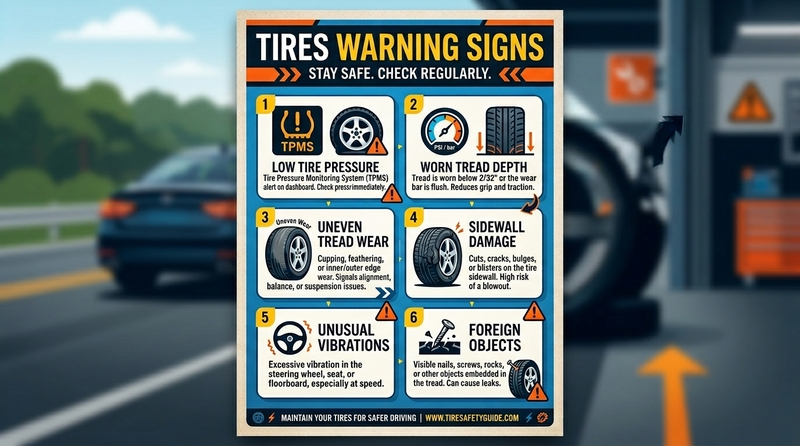
Table of Contents
Uneven Wear Tells a Story
Many drivers searching for the signs of bad tires check tread depth first, yet wear patterns often reveal the more profound issue. One shoulder may erode faster because alignment is off. Excess wear through the center can reflect overinflation. Both outer edges thinning early may suggest low pressure. Each pattern reduces road contact, raises heat, and weakens braking grip.
Road Noise That Changes
Some tire hum is normal, yet a fresh thump, roar, or rhythmic slap deserves attention. Sound that grows louder on smooth pavement can signal separated internal layers or irregular tread blocks. Loose debris lodged in grooves may also create sharp clicking. Noise shifts matter because they often appear before handling changes become obvious. Early evaluation can prevent a more serious failure.
Vibration During Normal Driving
A vehicle that trembles through the steering wheel, seat, or floor may have a tire-related fault. Minor imbalance can cause mild shaking, though persistent vibration sometimes points to internal structural damage. Risk increases after pothole impact or curb contact. If the sensation begins at one speed, then widens across a broader range, prompt inspection is warranted.
Cracks Along the Sidewall
Rubber ages even when mileage stays low. Fine sidewall cracks often develop after years of sunlight exposure, heat buildup, and long stationary periods. Hairline splitting may seem minor, yet it shows the compound is drying and losing elasticity. As flexibility declines, the casing absorbs impact less effectively. Older tires with visible cracking deserve close review, even if tread appears acceptable.
Bulges Mean Internal Failure
A bulge or blister usually means the inner carcass has weakened beneath the surface. Air pressure pushes outward where reinforcing cords no longer hold their intended shape. That soft spot can rupture with little warning, especially during highway travel. Potholes, sharp debris, and curb strikes are common triggers. Any visible swelling calls for immediate replacement rather than delayed action.
Exposed Wires or Fabric
Steel belts or fabric showing through the rubber indicates advanced deterioration. Once inner material becomes visible, the tire has already lost much of its protective layer. Puncture risk rises sharply, and grip can fall during braking or cornering. No sealant or patch restores that condition safely. Continued driving is unsafe, even over short local distances, once cords are exposed.
Low Tread Depth Cuts Grip
Shallow grooves struggle to channel water away from the contact patch, which increases hydroplaning risk during rain. A coin check offers a quick estimate, though a tread gauge gives a clearer measurement. Many safety experts favor replacement before the legal minimum is reached, especially in wet climates. Deeper channels support shorter stops and steadier cornering on slick pavement.
Air Loss Keeps Returning
Pressure that drops again after refilling can point to a puncture, leaking valve stem, or poor rim seal. Slow leaks may seem manageable, yet underinflation creates excess heat and higher rolling resistance. That combination can shorten casing life while reducing fuel efficiency. A tire that repeatedly loses air needs prompt diagnosis. Refill routines do not solve the underlying defect.
Handling Feels Less Precise
Worn or damaged tires often change the way a vehicle responds to driver input. Steering may feel delayed, braking distances may lengthen, and corners may seem less settled. Some motorists notice drifting on dry pavement without strong wind. Others sense reduced confidence during lane changes. Those shifts matter because predictable responses support safer decisions during sudden traffic or weather changes.
Replacement Timing Matters
Age can matter as much as visible condition. The date code within the dot marking shows the production week and year in the final four digits. A code ending in 3117 identifies the thirty-first week of 2017. As of May 14, 2026, that tire is about nine years old. Even with usable tread, age-related breakdown may justify replacement under manufacturer guidance.
Conclusion
Tire problems rarely appear all at once. More often, they begin with pressure loss, vibration, noise changes, or a small defect that worsens under daily driving. Quick attention can prevent larger repair bills and lower crash risk during emergency braking or wet travel. Drivers who inspect sidewalls, tread wear, age codes, and handling response regularly give themselves a stronger safety margin on every trip.