
Did Rosa Parks Husband Have a Car? Facts vs. Myths Explained

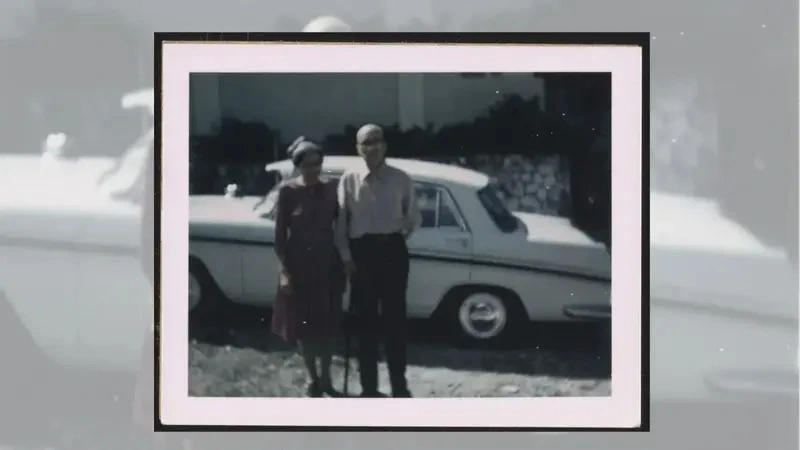
A picture of American civil rights activist Rosa Parks and her husband, Raymond Parks, from 1955, surfaced on the internet when a rumor was recently unfurled by a netizen. It was said that Rosa Louise McCauley Parks, popularly known as Rosa Parks, had her husband’s car when she protested against the racial segregation laws on public buses.
Table of Contents
Did Rosa Parks Husband Have a Car?
These laws required African Americans to sit in the back, while also giving up their seats to white commuters. It was Rosa Parks’ refusal to move from her seat on a bus in Alabama that led to the Montgomery Bus Boycott.
The Famous Photo of Rosa and Raymond Parks
When the picture of Rosa and Raymond Parks went viral, Rosa was accused of staging the protest. In fact, her efforts for African Americans were considered less genuine. This resulted in accusations questioning her support for the African American during that time. People had the notion that it was easier for Rosa Parks to avoid using public transportation during the protests as she owned a car. Later on, it was debunked by many historians and researchers that the Parks never owned a car during the protests.
The circulated image on the internet is said to have been taken in Michigan in 1970, almost 15 years after the bus boycott. In fact, the archival records in the Library of Congress have shown that Raymond Parks never owned a car at that time.
The Montgomery Bus Boycott:
In the history of the United States, the bus boycotts in Montgomery were a foundational step of the civil rights movement. When Jim Crow laws, a racial and anti-black system, mandated segregation between people based on race, the African Americans were forced to give up the front seats to white people. They were not allowed to drive the bus, nor sit next to a white American.
In the 1950s, the black community was subjected to racial discrimination under Jim Crow laws, which legalized such bigotry, for instance, segregation between black and white Americans. The percentage of black ridership for buses in Montgomery at that time was about 75%. Having such a high percentage of Black passengers, the bus boycott had a greater impact.
Rosa Parks, being an African American, was no different from such harsh treatment. It was her refusal to give up her seat to a white person that initiated the bus boycott. It lasted till 1956. It led to the Supreme Court declaring the segregation laws for buses in Alabama as unconstitutional.
Raymond Parks and Car Ownership
Like his wife, Raymond Parks was also a civil rights activist. He was also a barber by profession. In the words of Rosa Parks, he was “the first real activist” she had met. Born in Wedowee, Alabama, with no black school nearby, Raymond Parks could not get an education and taught himself to read and write.
He was also a founding member of the NAACP in Montgomery. Besides, he actively participated in the labor rights movements. Throughout his career, Raymond Park has lived off a modest income like most Black families in such socio-economic conditions.
He never owned a car in 1955. After Rosa Parks’ arrest during the Montgomery bus boycott, Raymond Parks, who was working as a barber at the Maxwell Air Force Base, lost his job. In fact, Rosa Parks purchased her first-ever car in 1968.
Her first car was a two-door 1965 Ford. Rosa Parks’ ownership records, including vehicle registration and purchase receipt for this car, are available at the Library of Congress. That’s how it was proven that Rosa Parks and Raymond Parks did not own a car until 1968.
Rosa Parks’ 1965 Ford:
Rosa Parks’ first-ever car was a two-door 1965 Ford, most likely a coupe with a capacity to seat up to 4-5 passengers. She purchased this car in 1968. Although there’s no exact information available about the configuration of Rosa Parks’ Ford, we know that the standard 1965 Ford comes with two engine options: an inline 6-cylinder engine or a V8 engine. Apart from that, there are three transmission options, including:
- 3-speed manual transmission
- 3-speed automatic transmission
- 4-speed manual transmission
Why the Misconception Spread?
What fuelled the rumour was when popular podcasters like Joe Budden cited the picture as evidence that the Parks owned a car at the time of the protests. It was shocking as it undermined the impact of Rosa Parks’ resistance and efforts to stand for Black people’s rights and equality.
What unfurlled this falsity was the viral picture of Rosa Parks and her husband standing next to a white car. A hubbub flared up on social media, and critics used this image to discredit Rosa Parks’ protest.
While the photo is historically authentic, it was not taken at the time of the protests, nor was the white car owned by the Parks. In fact, it was very uncommon for Black people to own a car in Alabama in the 1950s.
The Parks Family’s Financial Situation:
The Parks’ financial situation is a major factor that clearly shows they did not own a car at the time of the bus boycotts. As you might know, both Rosa and Raymond Parks had a modest income in the 1950s. Their income tax records have revealed that Rosa Parks and Raymond Parks had a gross income of about $3,749. 94. It was not possible for them to own a car at that time.
Rosa Parks used to work as a tailor’s assistant, while Raymond Parks worked as a barber at the Maxwell Air Force Base. Both Rosa and Raymond Parks were removed from their jobs after Rosa refused to give up her seat and her arrested, which led to bus boycotts.
It is reported that after they moved to Detroit, their income dropped to $661. In fact, they had to live with their relatives before moving into a rented apartment. Besides, the Parks also faced financial challenges like most black families in Alabama did. Such financial restraints were caused by unemployment, racial discrimination, and low wages. Considering their living conditions, it is evident that both Rosa and Raymond Parks were very unlikely to afford a car at that time.
Expert Testimony on the Parks Family
These accusations against Rosa Parks’ firm stance against segregation were clarified by historians and scholars. Jeanne Theoharis, the author of The Rebellious Life of Mrs. Rosa Parks and a famous scholar, has elucidated that both Rosa Parks and Raymond Parks had no vehicle in 1955. Even the records available at the Department of Revenue in Alabama have proven this.
In the words of Jeanne Theoharis, “Do you see how poor they were? Look at her income tax records.” According to her, Rosa and Raymond Parks did not own a car during the boycott period. Theoharis has emphasized that with such financial and socio-economic conditions in the 1950s, any Black family could own a vehicle. Her standpoint is backed by historical evidence, particularly the Rosa and Raymond Parks’ financial records.
Conclusion
Rosa Parks was a civil rights activist. She refused to relinquish her seat on the bus on purpose to protest against the Jim Crow Laws in Alabama that promoted discrimination and bigotry through segregation. Her refusal became a historic one that saw bus boycotts in Montgomery. Since over 75% of the bus passengers were Black, these boycotts caused an upheaval, owing to which the segregation laws were declared unconstitutional.
FAQs:
Rosa Parks purchased her first car in 1968. It was a Ford, 1965, a two-door car with a capacity of 4 to 5 people. Before this, Rosa Parks had always traveled by means of transportation such as buses. That is why the bus boycott movement was provoked by her refusal to relinquish her seat on the bus.
If Black people, particularly significant figures like Rosa Parks, had owned their own cars at that time, they could never have made an impact through the bus boycott. Besides, the bus boycott led to replacing the bus rides with Black-owned taxi services using cars rarely owned by Black people. In the words of Gretchen Sorin, author of Driving While Black, “Without the automobile, the bus boycott in Montgomery would not have been possible.”
Some of the myths about Rosa Parks and the bus incident. For instance, there’s a rumour that Rosa Parks was a shy and meek woman. Nevertheless, she was a defiant and experienced civil activist. Others criticize that Rosa Parks did not want to give up her seat due to her fatigue. Hence, it was not a tactical rebellion.