
8 Pieces of Evidence That Matter Most in a Car Accident Injury Case

Most people don’t think about evidence when they’re sitting on the side of the road after a crash. That’s understandable. It’s also where claims start losing ground before they’ve even begun.
Two drivers can come out of similar accidents on the same Salt Lake City road, I-15, Bangerter Highway, or Redwood Road, with similar injuries and end up in completely different places financially. Not because one was hurt worse. Because one had better documentation. A Salt Lake City car accident lawyer who handles Utah claims regularly will say it plainly: insurers don’t pay based on what happened. They pay based on what’s provable.
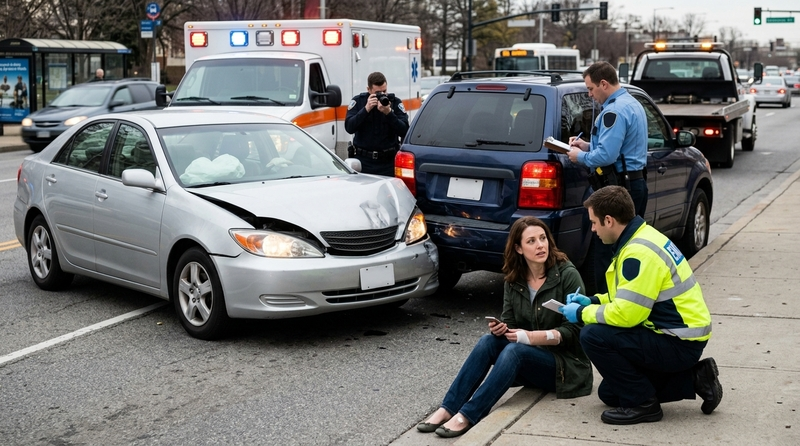
Here’s what makes something provable.
Table of Contents
1) Emergency Room Records
Timing is what makes the ER record valuable. The closer in time to the accident, the harder it is for the defense to argue that something else caused the injury.
- Discharge notes, imaging results, and the physician’s initial observations all belong here.
- Ambulance transport records document immediate severity independent of what the ER found.
- Request copies early. Don’t assume the hospital holds them indefinitely.
2) Diagnostic Imaging
What imaging reveals is beyond what you say you feel. It is precisely because it is independent that it carries weight.
Insurers aren’t going to brush aside MRIs, CT scans, or X-rays that revealed herniated discs, fractures, or soft tissue damage.
Imaging that occurred weeks after the accident remains relevant. There are some wounds that occur or get worse after the initial trauma.
Maintain a written radiology report and the actual imaging files.
3) Physical Therapy Records
The power of physical therapy is that it’s a long-term treatment, and a single emergency room visit is not indicative of the severity of all injuries.
Attendance records demonstrate ongoing engagement with recovery. Gaps get scrutinized.
Specific notes made by the therapist at each session provide a dated, specific record of injury progression.
4) Witness Statements
The two sides’ accounts of a crash are not considered objective. An independent witness, who has no interest in the outcome, is another category of evidence.
Written statements taken immediately after the accident are more significant than statements recalled a few weeks later.
There is a tendency for people to leave accident scenes and get unreachable quickly. The first step is to collect names and contact details at the scene.
If a witness’s deposition conflicts with the other driver’s testimony, the party may avoid the costly reconstruction and still resolve liability issues.
5) Event Data Recorder
Most modern vehicles record speed, braking input, steering activity, and seatbelt status in the seconds before impact.
- This data can directly contradict a driver’s account of what they were doing before the crash.
- It gets overwritten quickly. Formal legal preservation needs to happen fast.
6) Cell Phone Records
When distracted driving is a factor, phone records establish whether the at-fault driver was actively using their device at the moment of impact.
- Call logs, text timestamps, and app activity are all obtainable through legal process.
- This evidence has resolved Utah liability disputes where no other direct evidence of distraction existed.
7) Prior Medical Records
The defense will use pre-existing conditions to reduce or eliminate the claim. Prior records are the direct answer to that.
- Documentation showing that a prior condition was stable and well managed before the accident establishes a clear before-and-after picture.
- Utah recognizes the eggshell plaintiff doctrine. Defendants are responsible for the full harm they cause, even when a prior condition made the injured party more vulnerable.
8) Your Written Account of the Crash
Write it down as soon as you’re physically able. Don’t wait.
- The sequence of events, weather and road conditions, the other driver’s behavior, and what was said at the scene.
- How did you feel immediately after, even if you didn’t go to the hospital that day?
- Date it. The fact that it was written close to the event is part of what makes it credible.
Conclusion
Insurance adjusters work from a checklist of what’s missing, not what’s present. Every gap in documentation is a number they feel justified in reducing.
The claims that get properly compensated in Salt Lake City are built carefully, from the day of the accident forward, with nothing left to remember when it matters most.